Description
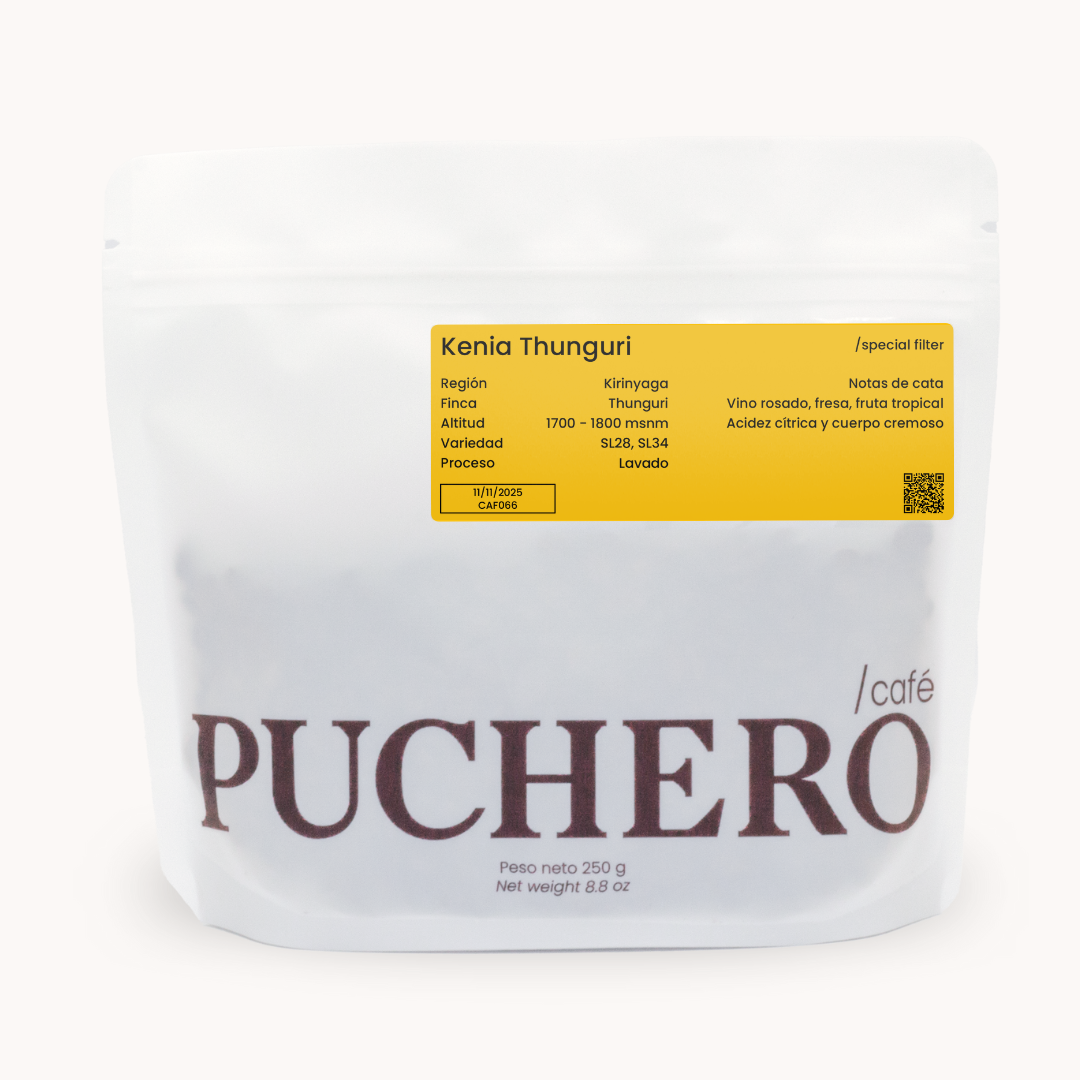
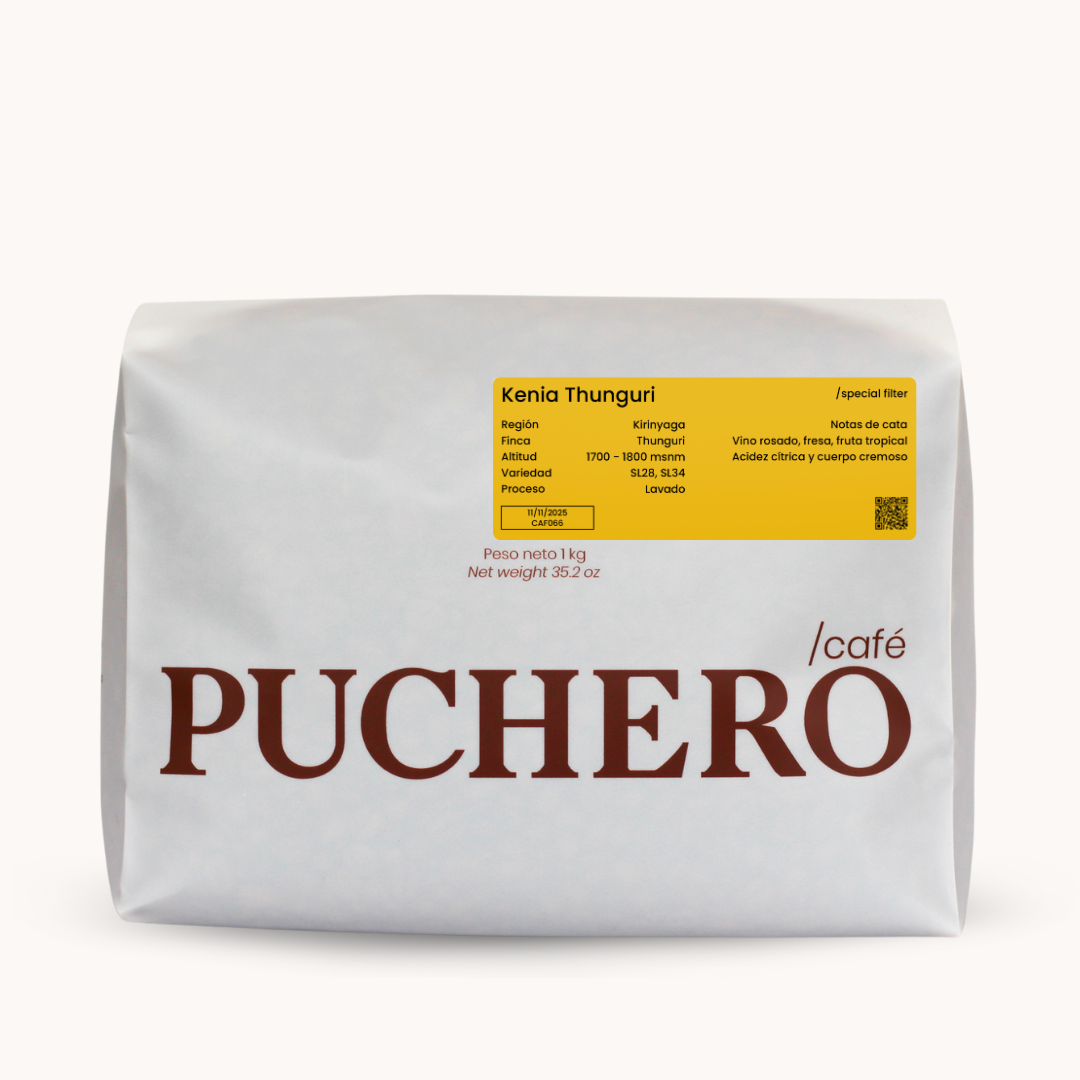
Kenya
Thunguri
/special filter
| Country | Kenya |
| Region | Kirinyaga |
| Farm | Thunguri |
| Height | 1700 – 1800 meters above sea level |
|
Variety
|
SL28, SL34 |
|
Process
|
Washed |
TASTING NOTES
Rosé wine, strawberry, tropical fruit
Citrus acidity and a creamy body
The Thunguri factory is located in Kirinyaga County, in a region of lush green valleys where tea—and often coffee as well—is grown. It is part of the Kibirigwi Farmers’ Cooperative, which comprises a total of seven factories. Currently, Thunguri has about 1,500 members, each with an average of half a hectare devoted to coffee, in addition to other crops such as macadamia nuts, beans, plantains, tea, and corn. The area is characterized by its deep, fertile red volcanic soil, which is well-drained and lies between 1,700 and 1,800 meters above sea level.
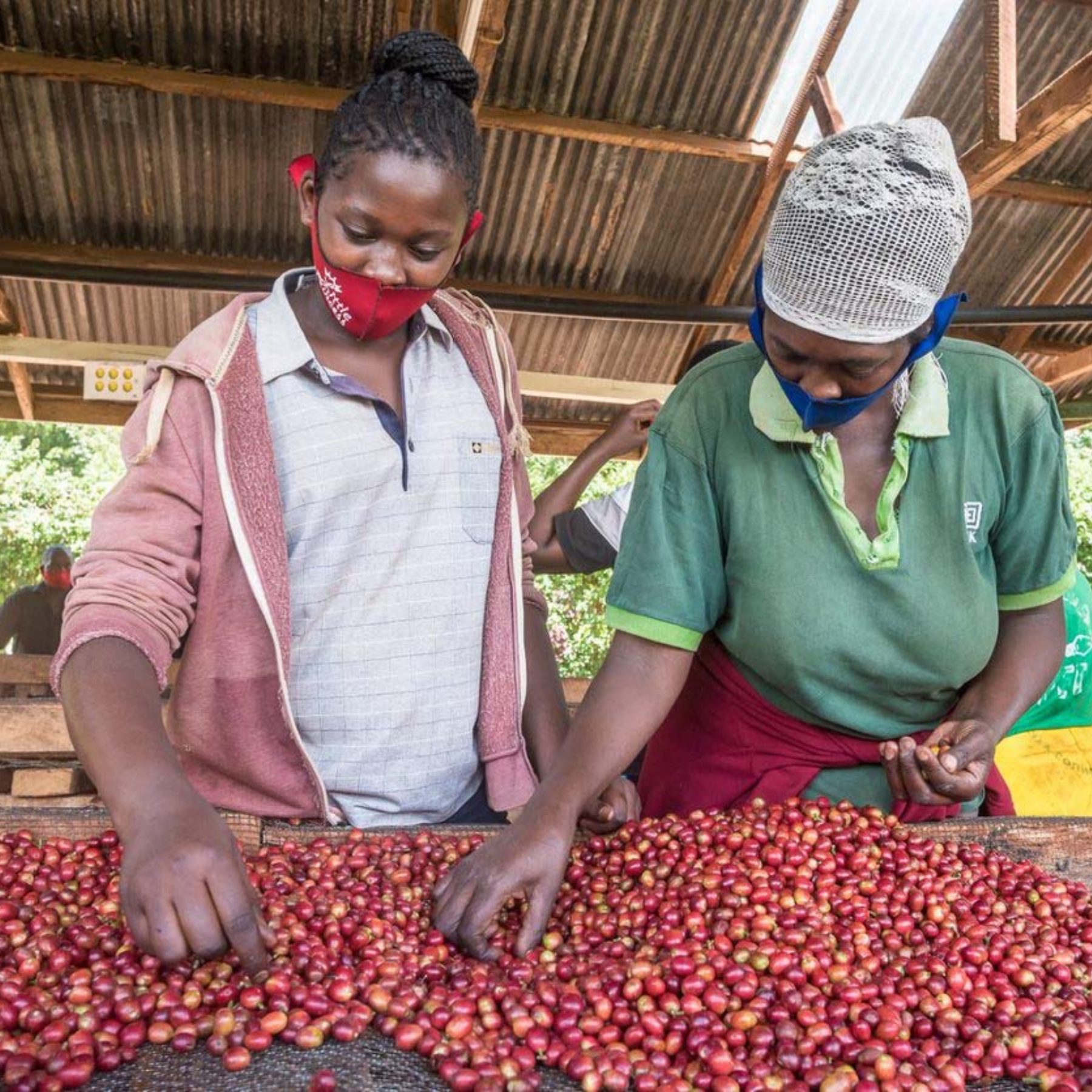
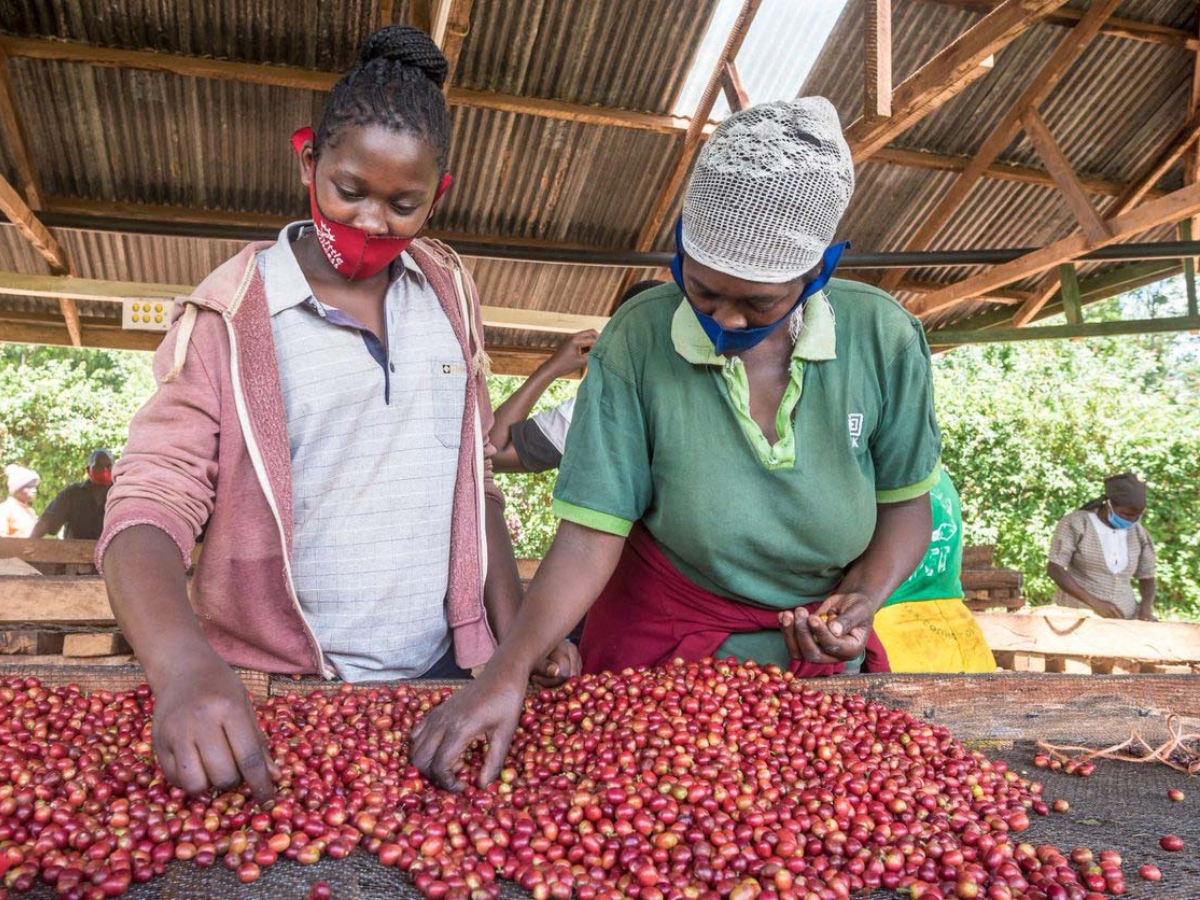
Thunguri consistently produces high-quality coffee. Smallholder farmers harvest the coffee cherries by hand and deliver them to the processing plant, where they are pulped. During this process, the dense beans are separated from the unripe ones through flotation in water: the heavier beans sink and are channeled into the fermentation tanks.
The first fermentation lasts about 24 hours, after which the beans are washed and transferred to a second fermentation tank for an additional 12 to 24 hours. Once this step is complete, the beans are moved to the washing channels, where any remaining floaters are removed and the mucilage is washed off the dense beans.
The washed beans are then placed in soaking tanks filled with clean water for about 24 more hours. This process allows the amino acids and proteins in the cell structure to develop, resulting in coffees with higher acidity and more complex fruity flavors. This soaking stage is believed to be key to the distinctive flavor profiles of Kenyan coffees.
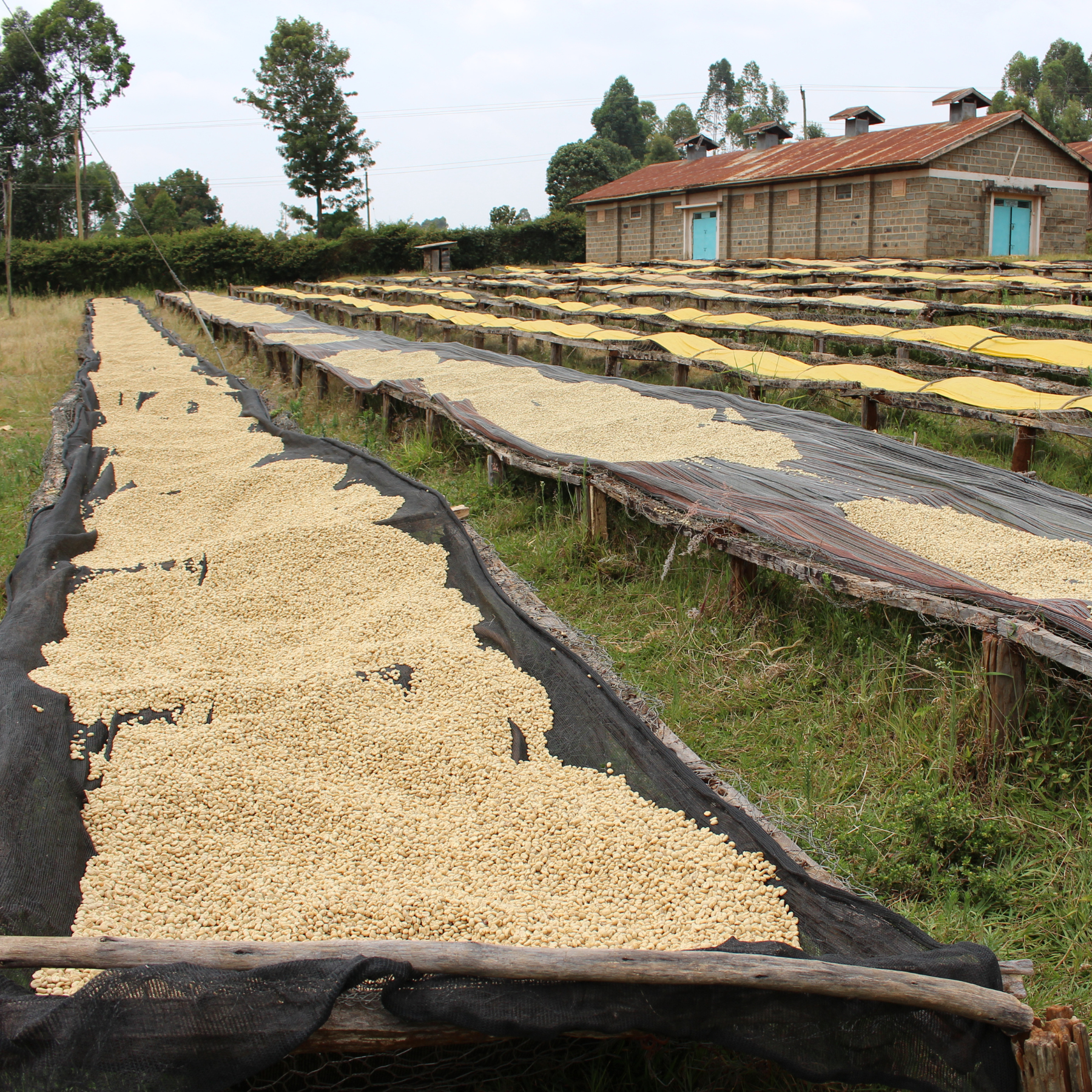
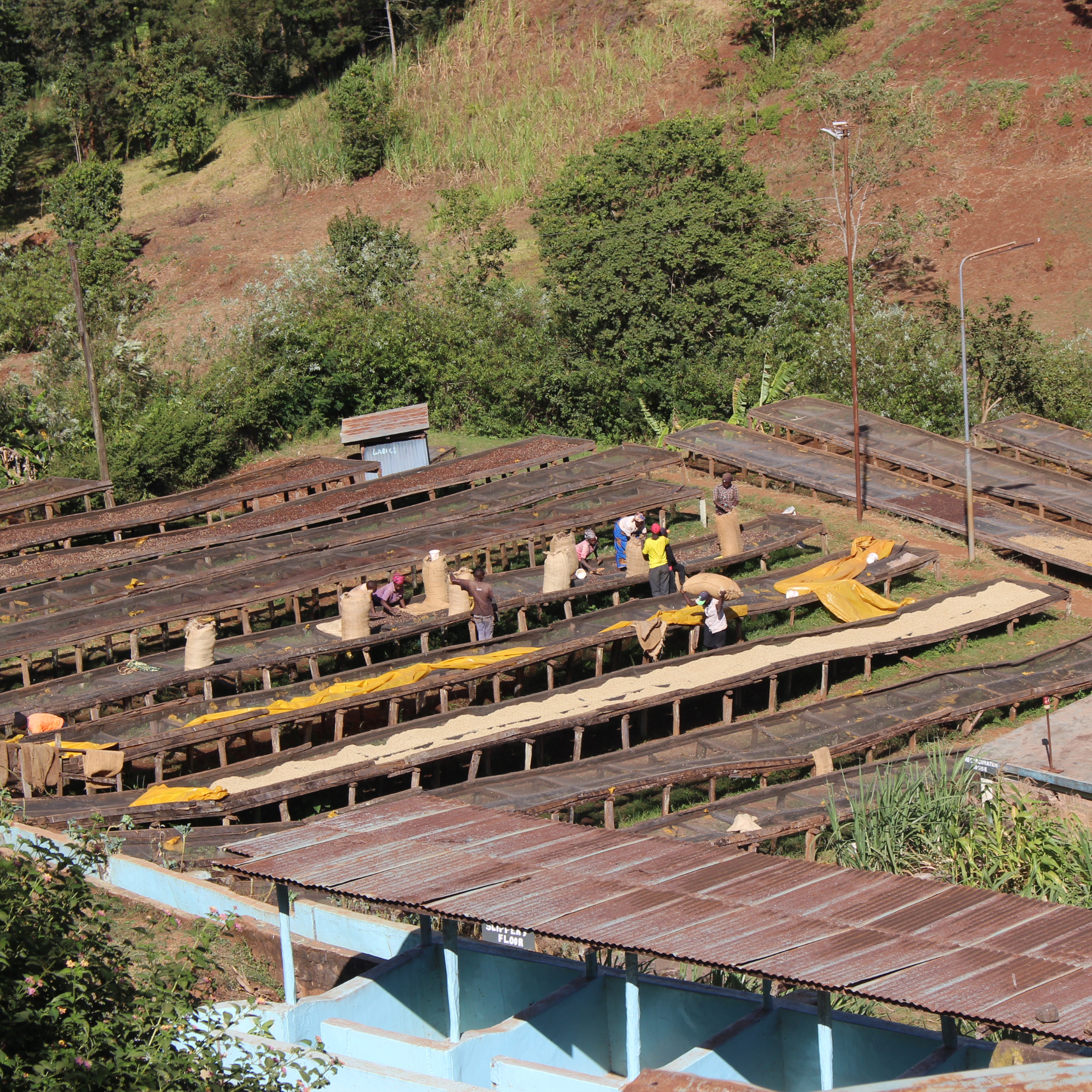
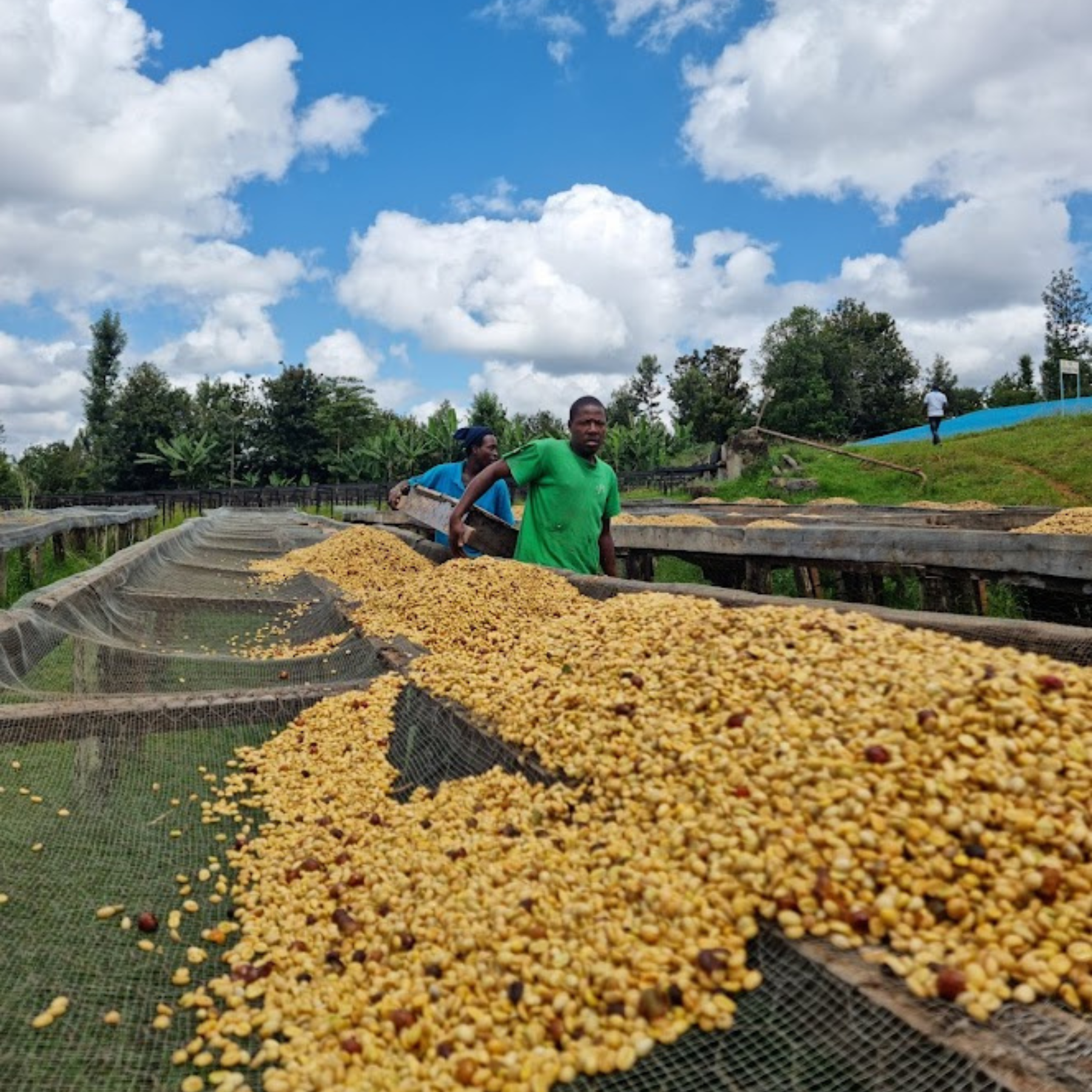
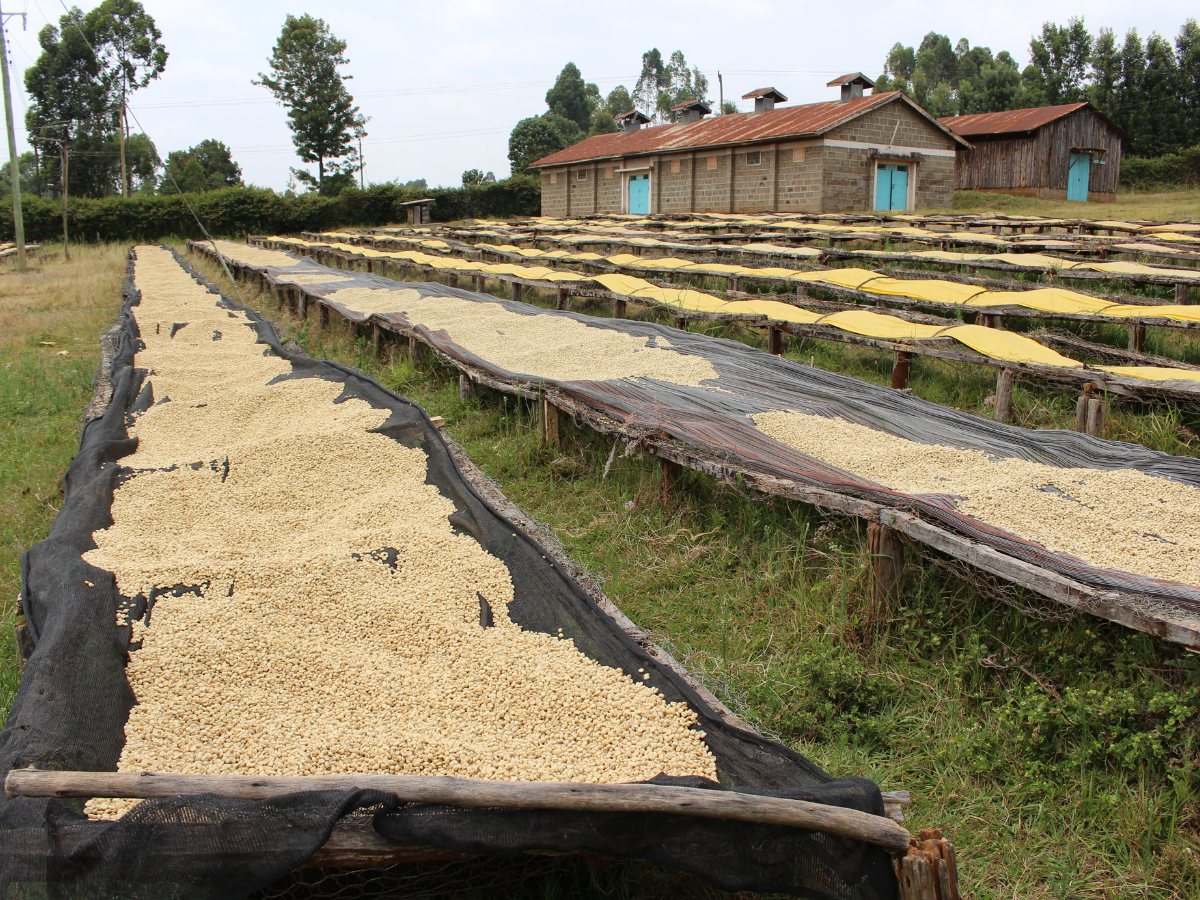
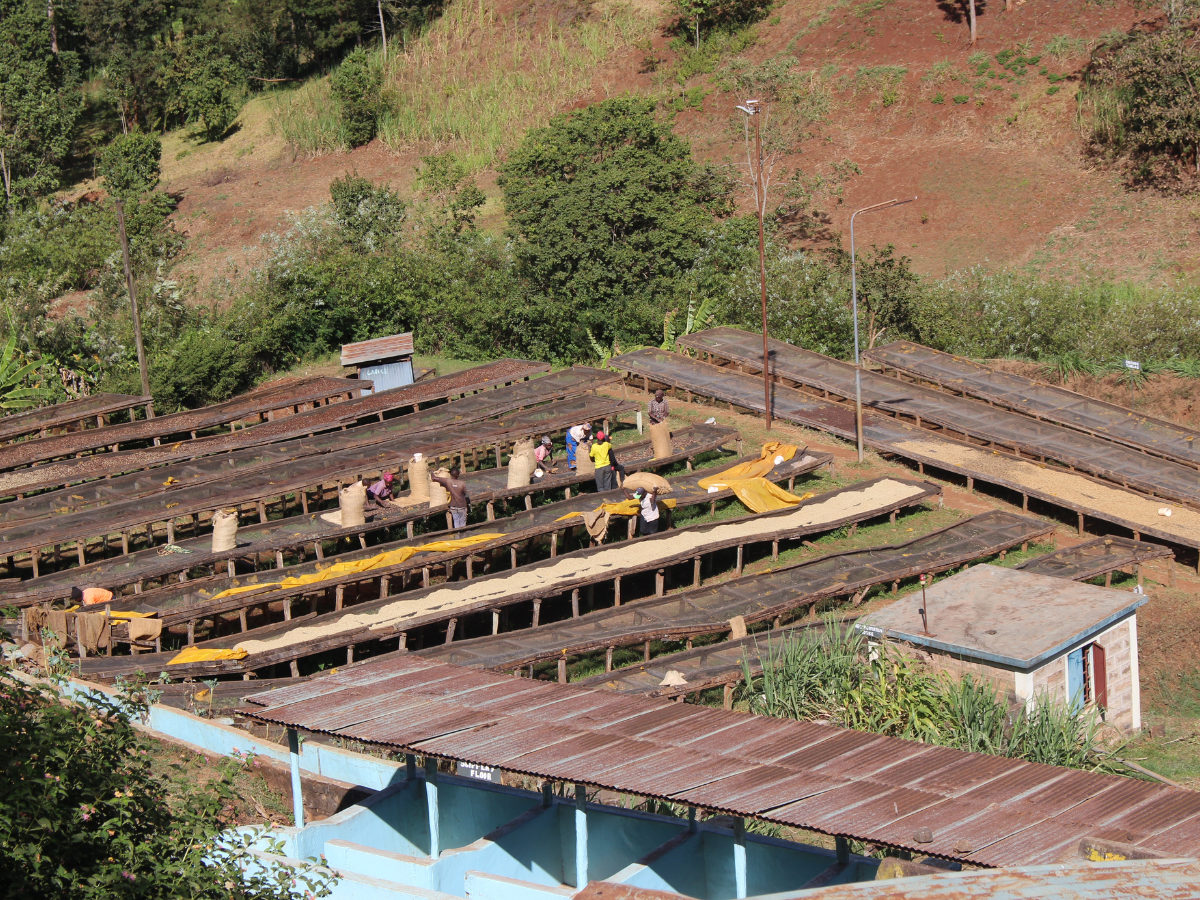
Next, the beans are spread out in a thin layer on initial drying tables, which helps quickly remove about 50% of the moisture. This first drying phase usually lasts about six hours, after which the beans are piled into thicker layers and dried for another five to ten days.
Once dry, the parchment beans are sent to a private processing facility and stored in warehouses on elevated metal mesh racks, which allow for proper ventilation. There, the moisture content is further reduced until it reaches a level below 11 percent, at which point the coffee is ready to be packaged and exported.