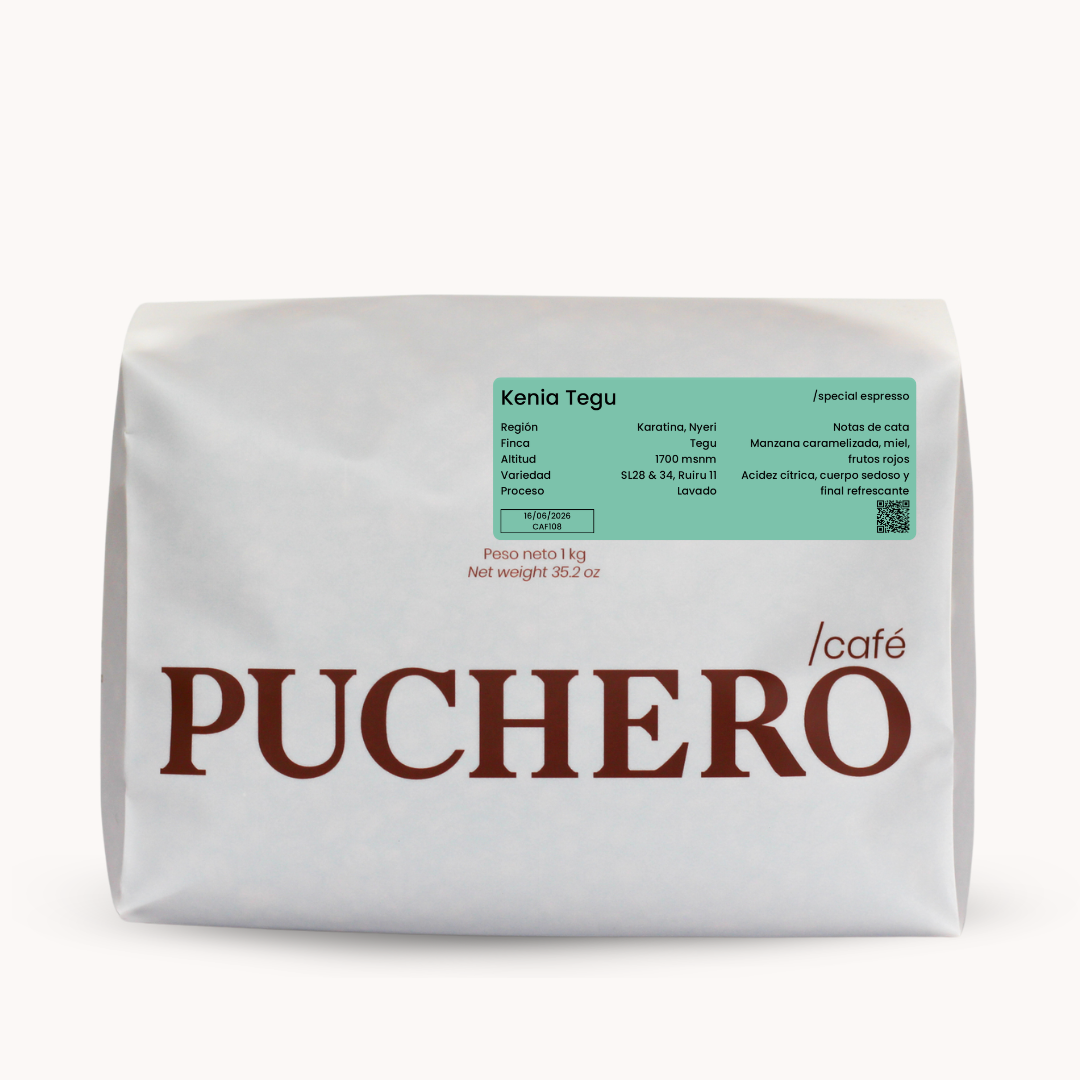
Description
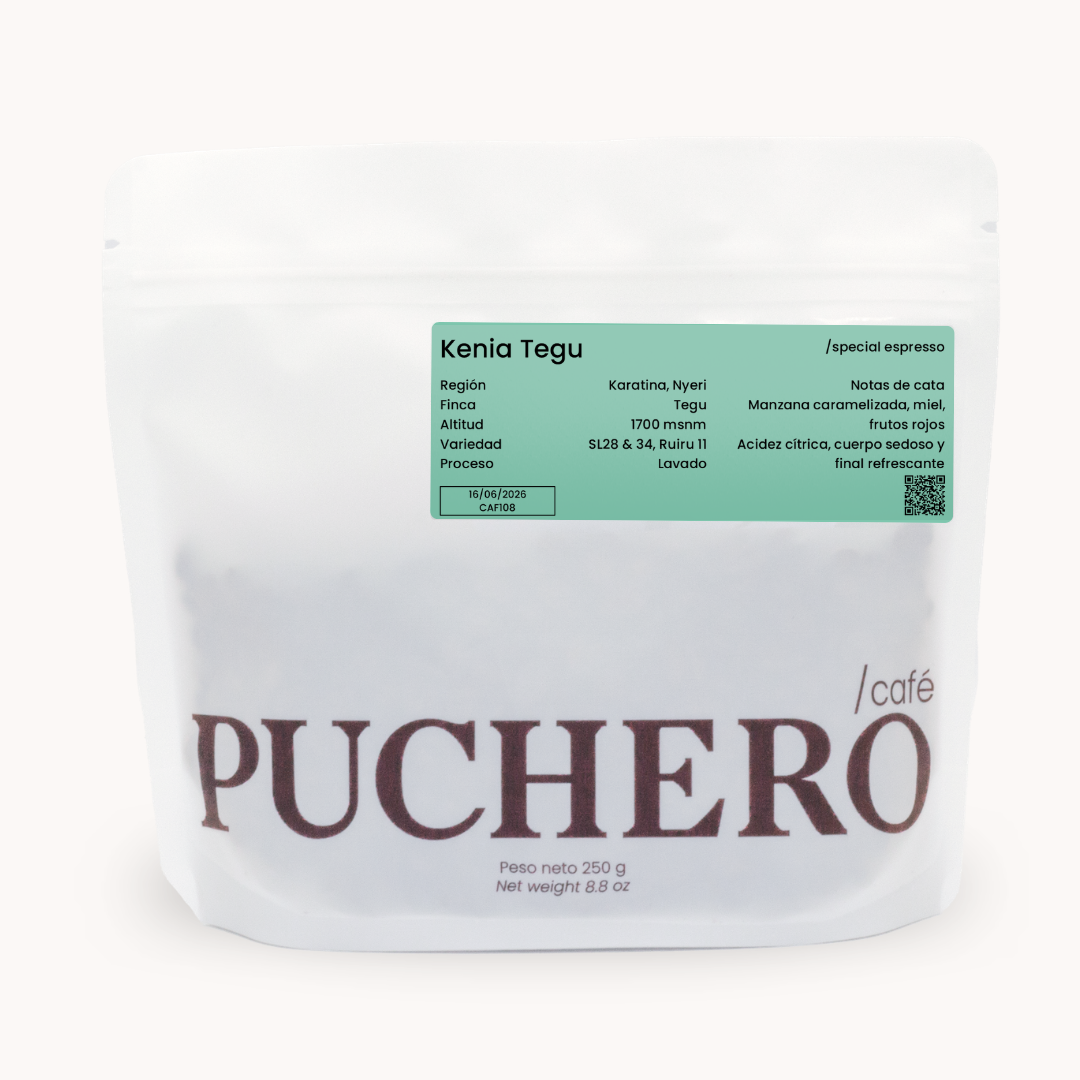
Kenya
Tegu
/special espresso
| Country | Kenya |
| Region | Karatina, Nyeri |
| Farm | Tegu |
| Height | 1700 meters above sea level |
| Variety | SL28 & 34, Ruiru 11 |
|
Process
|
Washed |
TASTING NOTES
Caramelized apple, honey, red berries
Citrus acidity, silky body, and a refreshing finish
Kenya Tegu
In the Kenyan highlands, where fertile volcanic soils meet the cool mountain air, the Tegu factory produces coffees widely recognized for their clarity and vibrancy. Located near the town of Karatina in Nyeri County, this Washed facility operates under the Tekangu Farmers’ Cooperative Society, alongside its sister facilities, Karogoto and Ngunguru. Founded in 1969, the cooperative now supports some 1,200 smallholder farmers, most of whom cultivate less than one hectare in nearby villages.
The name “Tegu,” which means “low-lying place,” reflects its geographic location in the foothills between Mount Kenya and the Aberdare Range. At an altitude of approximately 1,700 meters above sea level, the region enjoys ideal conditions for coffee cultivation. The combination of fertile soil, high altitude, and a cool climate slows the ripening of the coffee cherries. This extended development period allows sugars and acids to concentrate, resulting in the bright, citrusy profiles that have become synonymous with Kenyan coffees.
The farmers who supply Tegu grow a mix of traditional and modern varieties, including SL28, SL34, Ruiru 11, and Batian. The SL varieties, originally developed by Scott Agricultural Laboratories in the early 20th century, are prized for their deep root systems and resistance to water scarcity. Meanwhile, the Kenya Coffee Research Institute introduced more recent cultivars, such as Batian and Ruiru 11, to improve disease resistance and productivity. Both are capable of producing coffee cherries in as little as two years, offering farmers greater profitability without compromising quality.
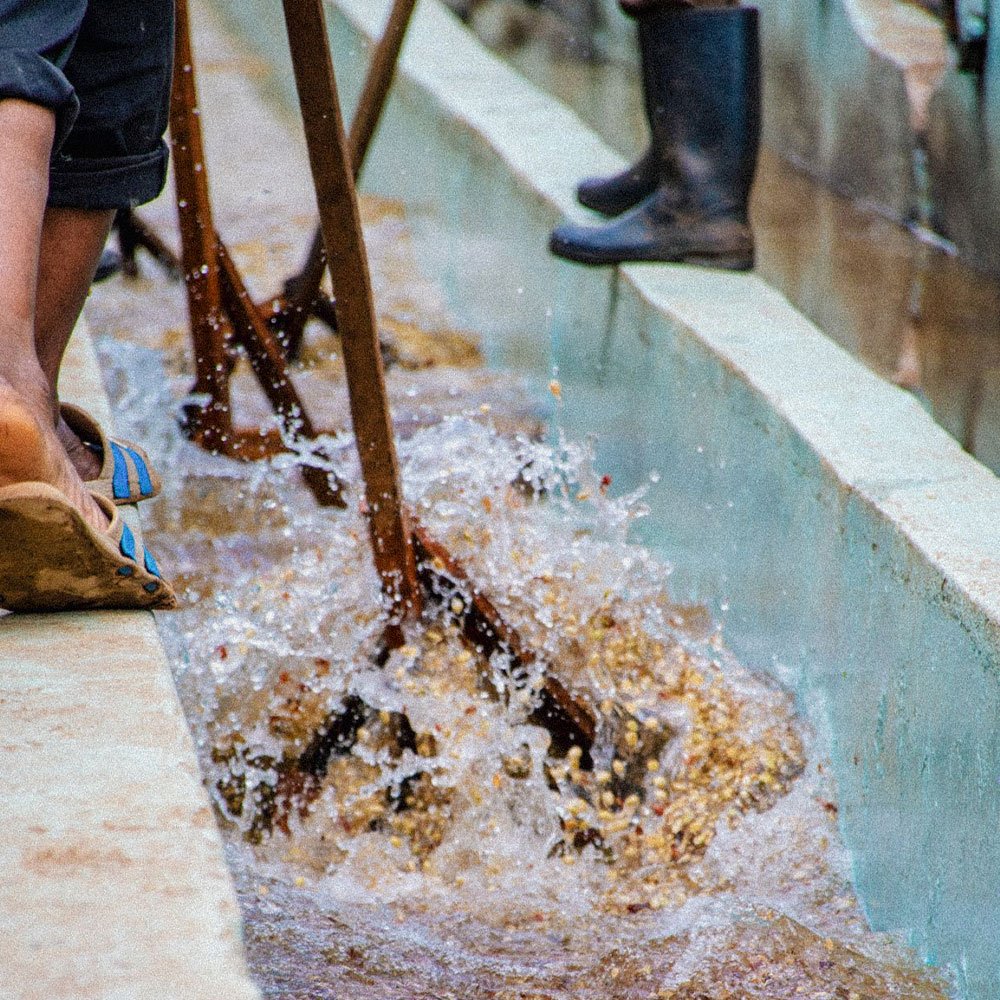
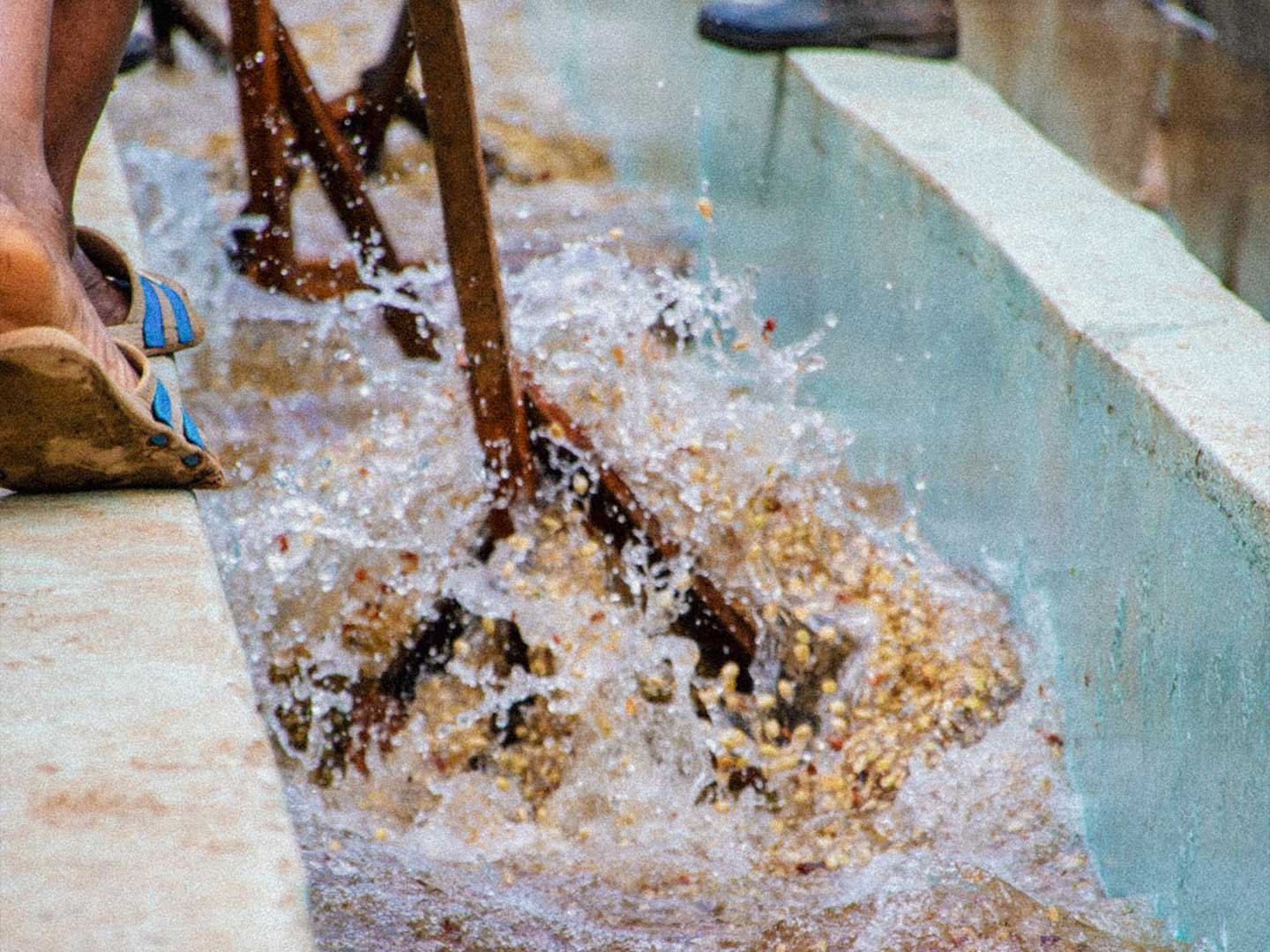
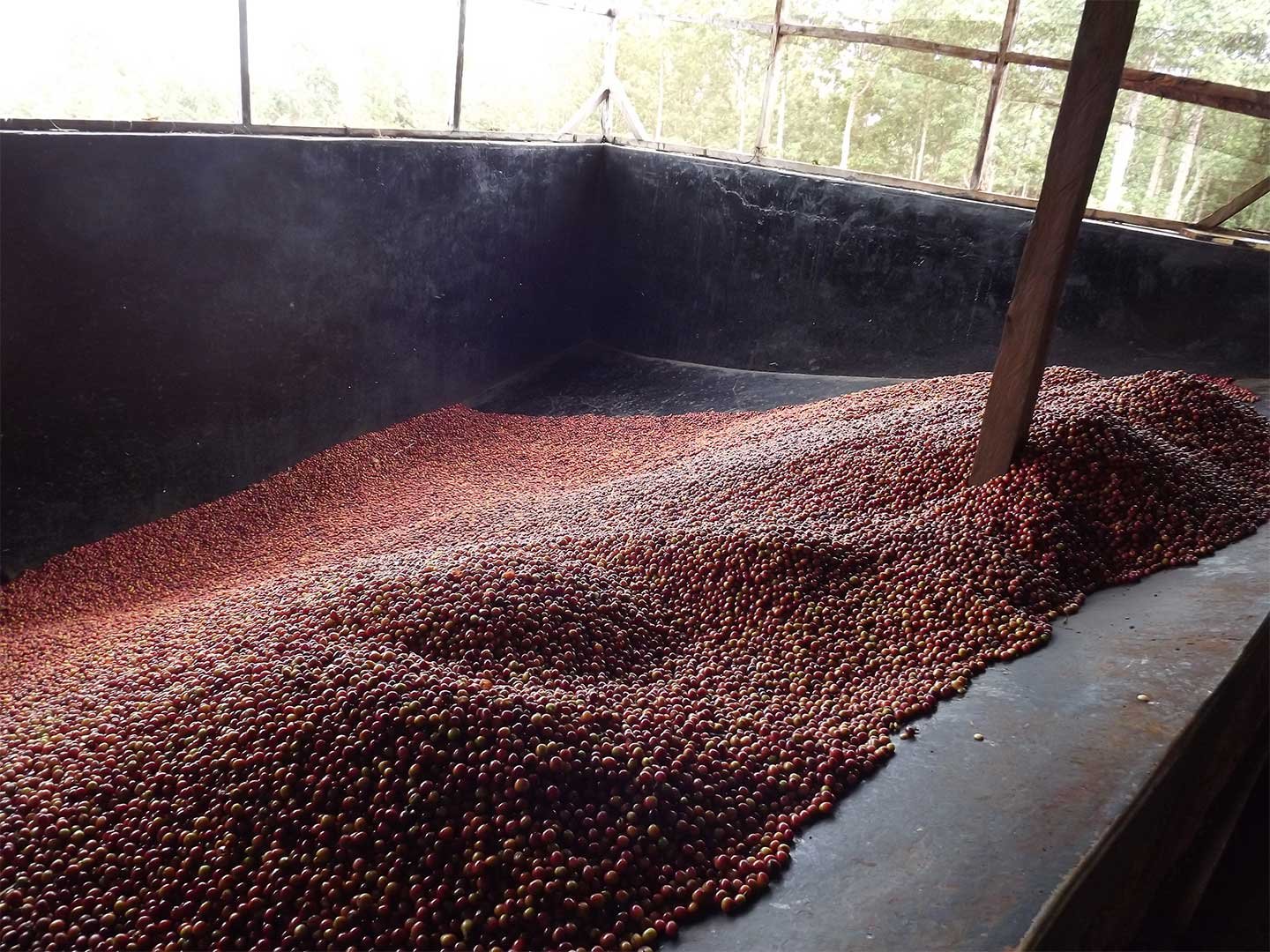
The harvest is done entirely by hand; farmers carefully select only the ripe cherries before delivering them to the factory in Tegu. Once received, the cherries are meticulously sorted to remove any defects. Processing follows the full- Washed method, which begins with pulping and fermentation, a process that lasts between 12 and 16 hours, depending on environmental conditions. After fermentation, the coffee is soaked in clean water for an additional 24 hours; this practice not only stabilizes the coffee but is also believed to enhance the clarity and brightness in the cup.
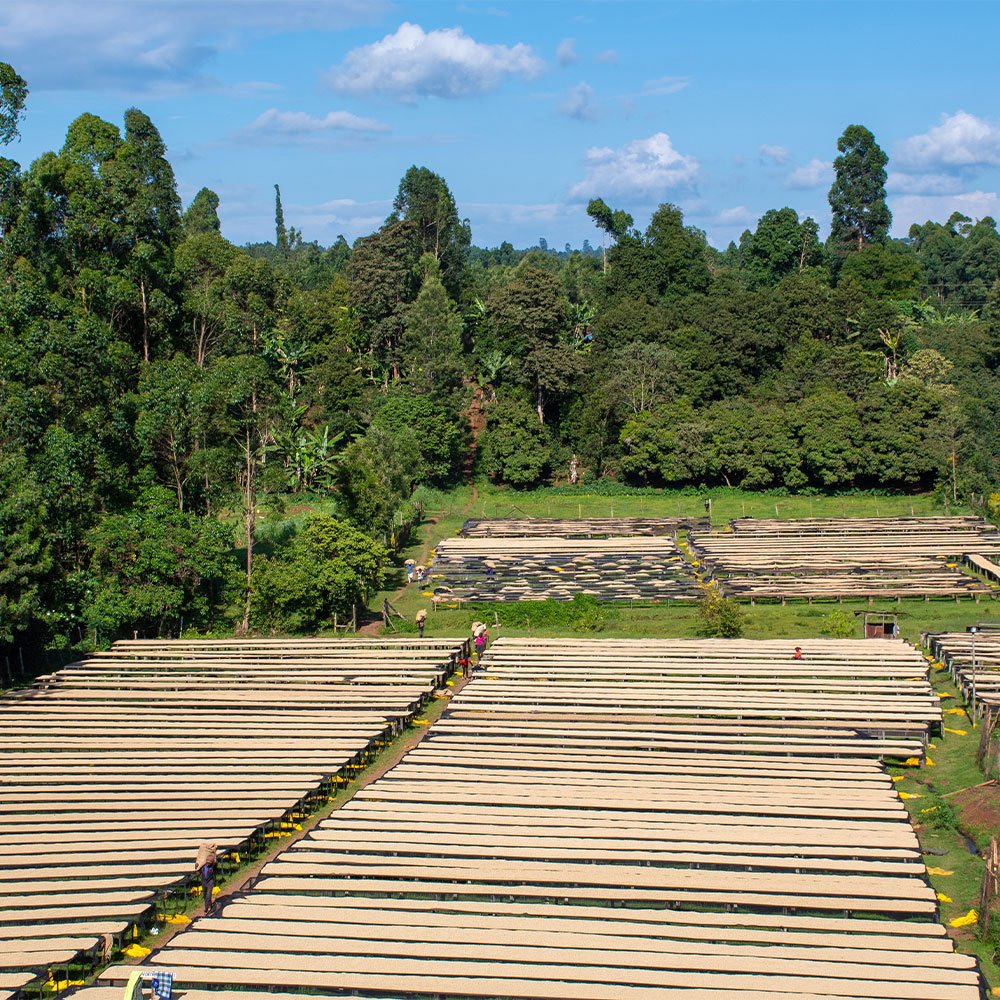
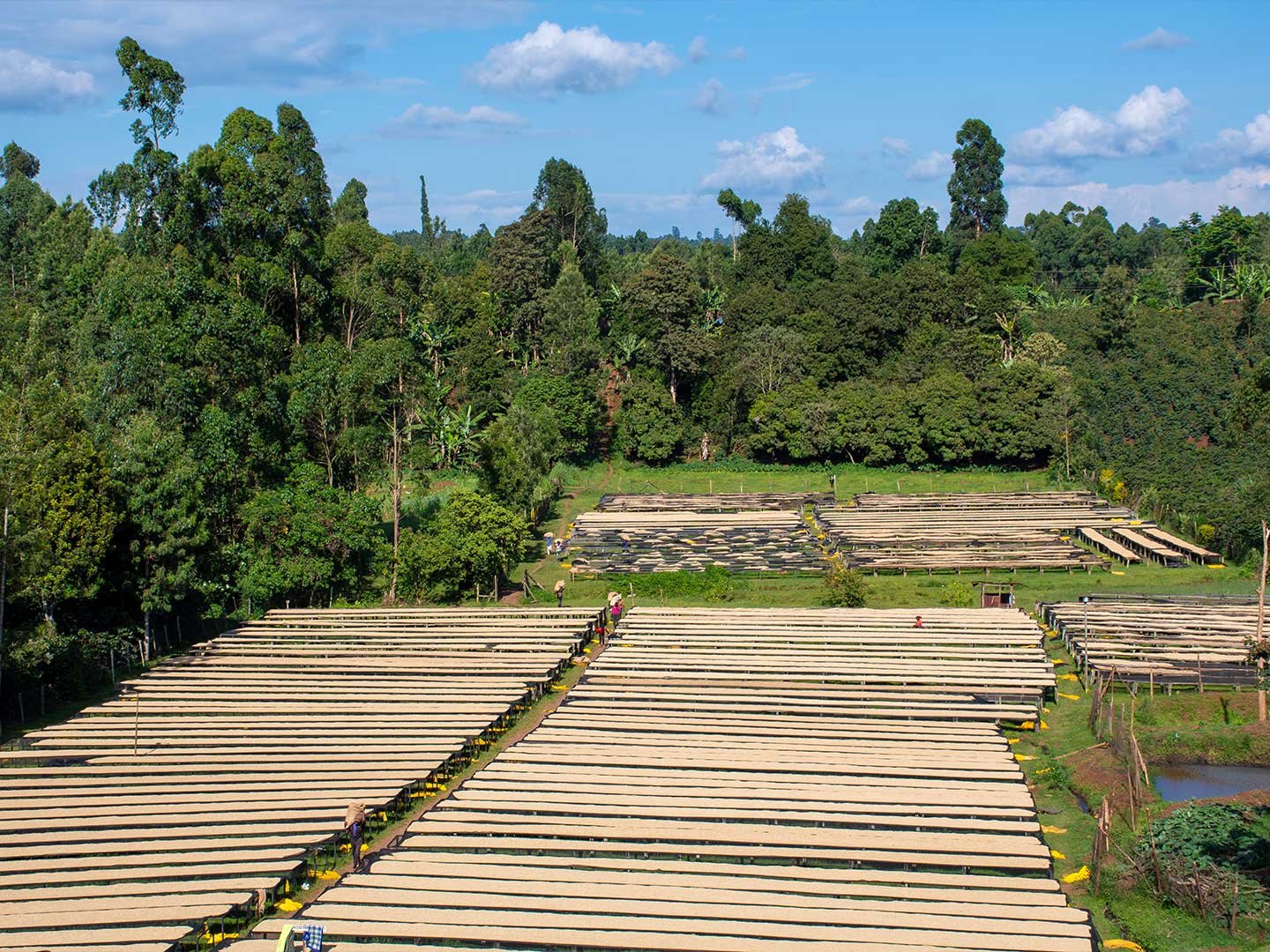
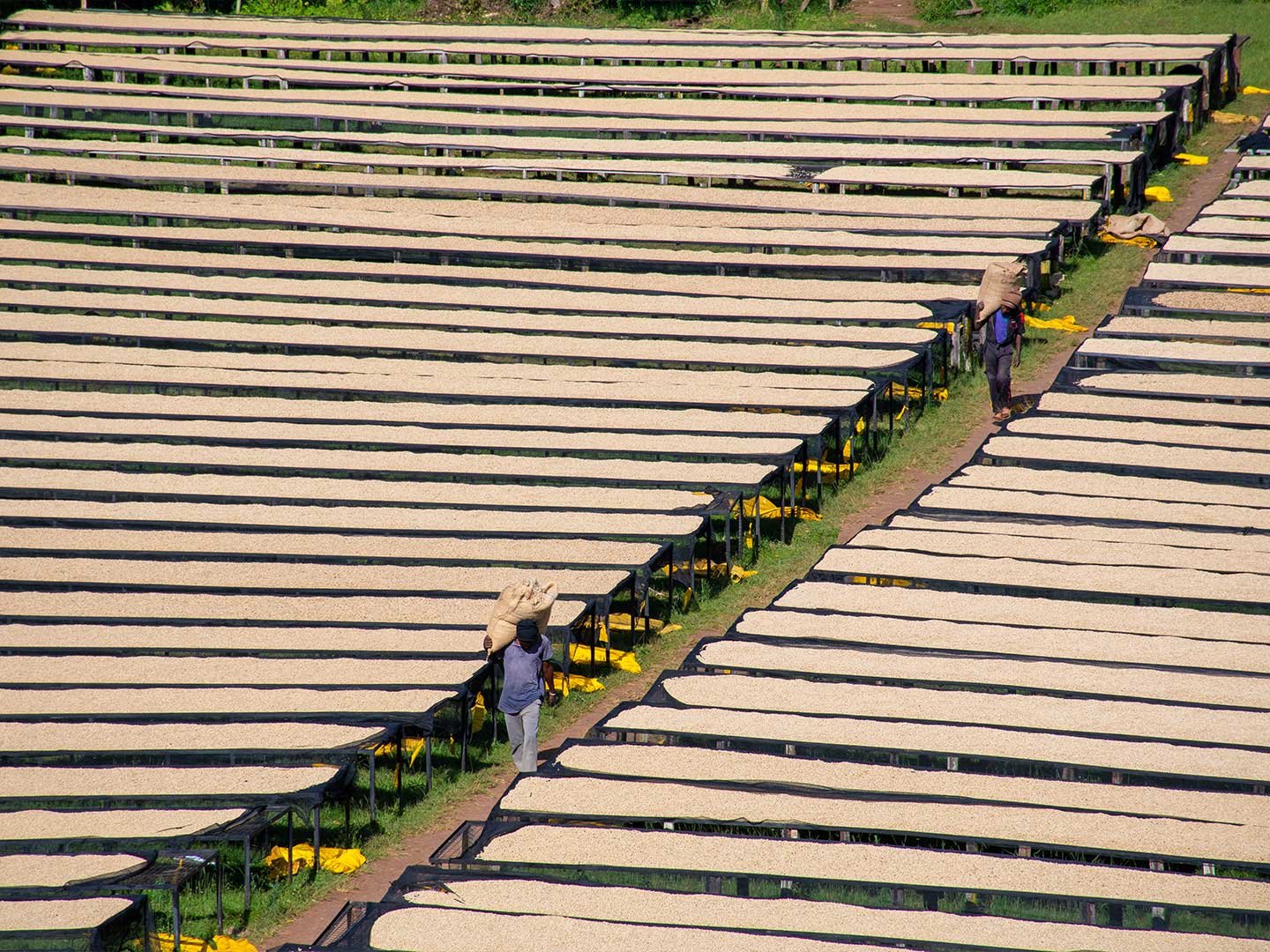
Drying takes place on raised beds inside covered structures, where the parchment is handled with care. Workers turn the coffee regularly to ensure even drying and protect it from excessive heat during the day and humidity at night. This stage typically lasts between 7 and 15 days. Once dry, the parchment is milled and prepared for export.